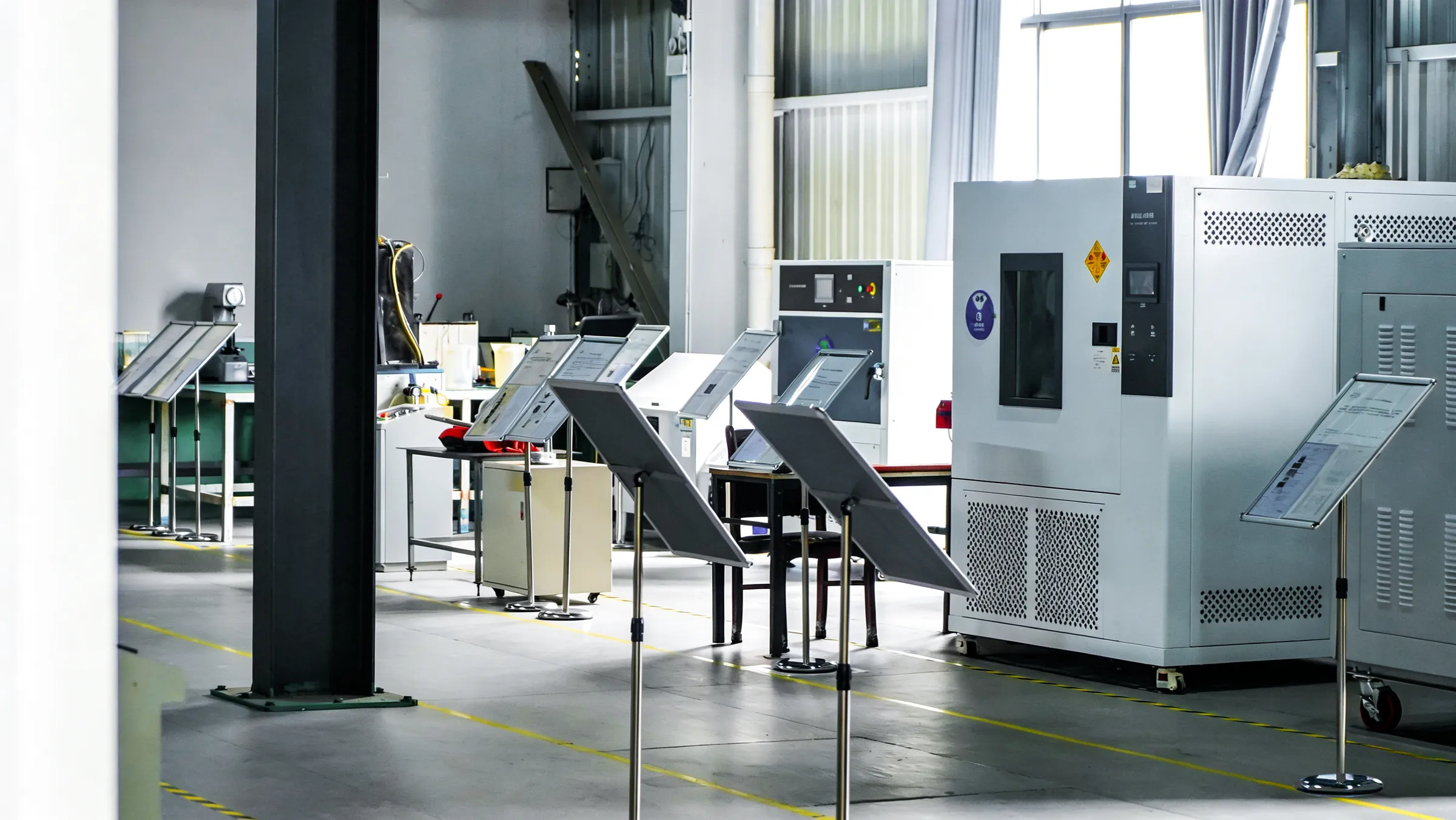
YQ40 Heavy Machinery Seat Supplierfor Machine Builders and Distributors: Size, Slide and Backrest Range
KL Seating supplies the YQ40 heavy machinery seat to machine builders that fit seats on new cranes, excavators, trucks and other construction machinery, and to distributors and importers that stock a seat for the same machines. YQ40 measures 570 × 480 × 1160 mm overall, slides 120 mm forward and 110 mm rearward in 23 positions, and sets its backrest anywhere from 80° to 121°. The parameter sheet lists construction machinery, crane, excavator and truck as the machines it is made for.
- Overall size 570 × 480 × 1160 mm
- Slide of 120 mm forward and 110 mm rearward in 23 positions
- Backrest from 80° to 121°
- Own lines for foam molding, precision stamping and robotic welding
- ISO 9001:2015, CE, RoHS and REACH certificates
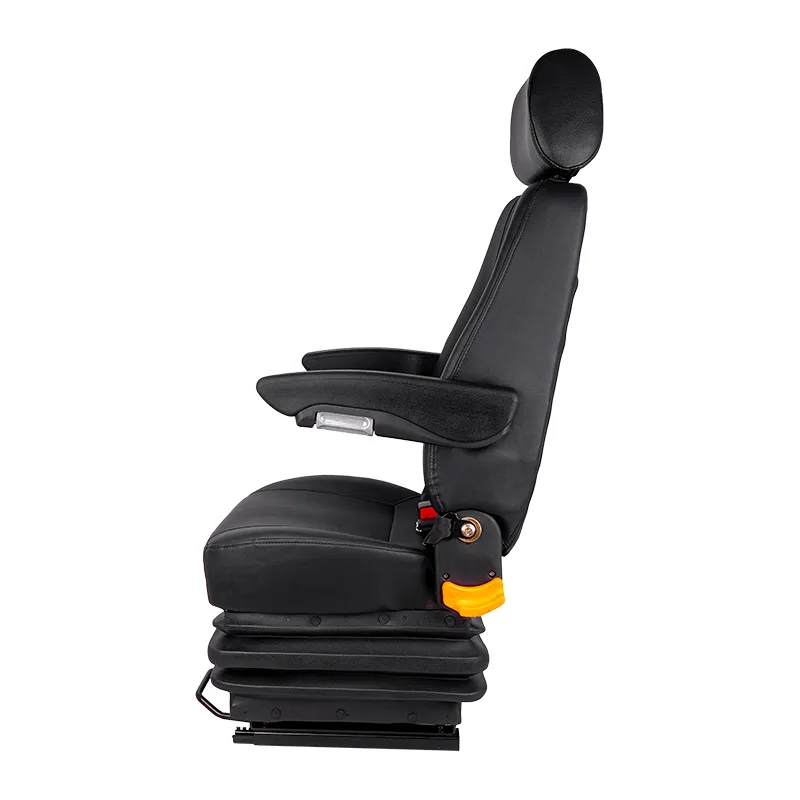 Schematic · figures from the YQ40 sheet
Side view · Schematic, not to scale · figures from the YQ40 sheet · 23 teeth = 23 slide positions
YQ40 Fit Check: Overall Size and Seat Positions Against the Cab
A seat in a heavy machine does not stay in one position. The operator slides it forward to reach the controls, slides it back to get in and out, and reclines the backrest between work phases. The fit check for YQ40 therefore runs on the seat in its end positions, and each end position has a figure on the sheet.
Most seat enquiries for heavy machinery start with the cab. The overall size, the slide and the backrest sweep are the three figures that decide whether a seat sits in the cab and whether the operator reaches the controls.
| Cab measurement | YQ40 figure to put against it |
|---|---|
| Free width and free depth at the seat base | 570 mm wide and 480 mm deep overall |
| Free height from the base to the cab roof or window line | 1160 mm overall height |
| Room in front of the seat for the forward slide | 120 mm of forward slide |
| Room behind the seat for the rearward slide and the reclined backrest | 110 mm of rearward slide and a backrest set up to 121° |
| Operator posture in working phase | Backrest from 80°, slide set in one of 23 positions |
| Seat height at the front and at the rear of the cushion | Each end tilts ±9°, which is 65 mm |
23 slide positions matter for fitting more than the travel figure suggests. A slide with fixed positions lets the machine builder specify the seat setting used for the cab approval, and lets a distributor tell a customer which position the old seat sat in. The reply to your enquiry names the position range that covers the operator seating range you send.
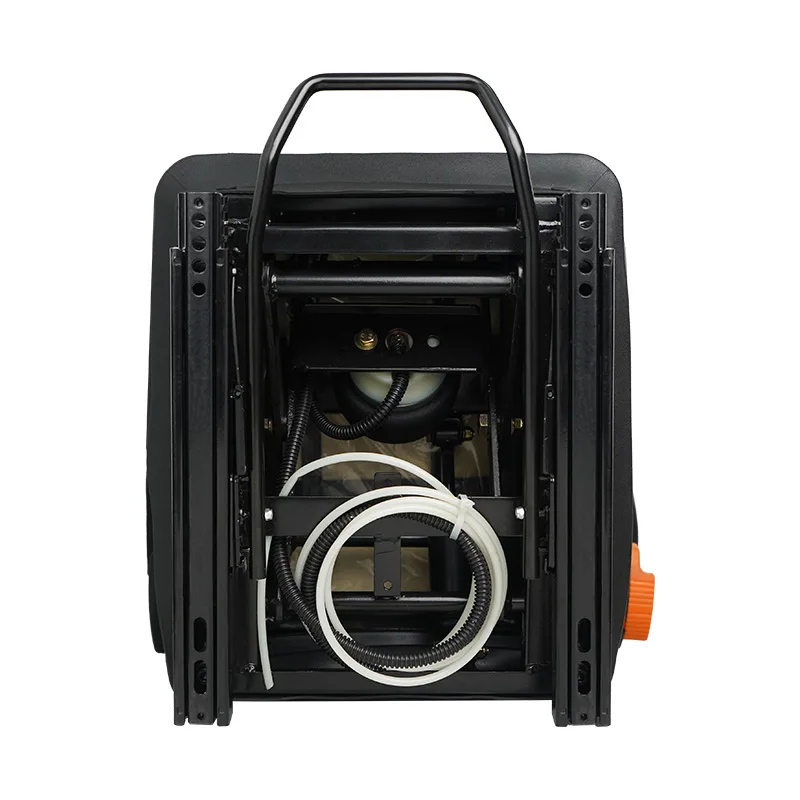
Machine builders take the free-space figures from the cab drawing and run the table above line by line. Distributors and refit shops take the same figures from the old seat taken out of the machine, with a tape measure at the base, at the backrest top and at the slide rails. Photos from the front, the side and underneath go with the measurements. The seat fitment compatibility guide for machine builders and distributors lists what to measure on the machine before the first message, and the same list serves for this table.
When all six lines agree, the order is placed against the parameter sheet. When one line does not agree, the reply says which line and sets YQ40 beside the model of the construction machinery seat manufacturer range that covers that line.
YQ40 Specification Sheet: Dimensions, Slide, Backrest, Cover and Options
| Item | YQ40 |
|---|---|
| Overall | |
| Overall size | 570 × 480 × 1160 mm |
| Cushion | |
| Cushion height | 270 to 335 mm |
| Cushion width | 485 mm |
| Cushion depth | 470 mm |
| Front and rear height adjustment | ±9° at each end, 65 mm |
| Backrest | |
| Backrest height | 630 mm |
| Backrest width | 480 mm |
| Backrest angle | 80° to 121° |
| Motion | |
| Horizontal slide | 120 mm forward, 110 mm rearward, 23 positions |
| Cover, options and uses | |
| Cover | PVC |
| Options | Armrests, headrests, seat belts |
| Certificates on the sheet | CE, ISO |
| Uses listed on the sheet | Construction machinery, crane, excavator, truck |
| Suspension type and travel | Not stated on the sheet |
The YQ40 drawing carries the same figures and adds a mounting hole map. The sheet and the drawing agree on every value listed here. The sheet and the drawing do not state the suspension type or a suspension travel, so this page does not give one either.
YQ40 Against YQ50, YS15 and YL02 on the Parameter Sheet
Scroll sideways to see all four models.
YQ40 | 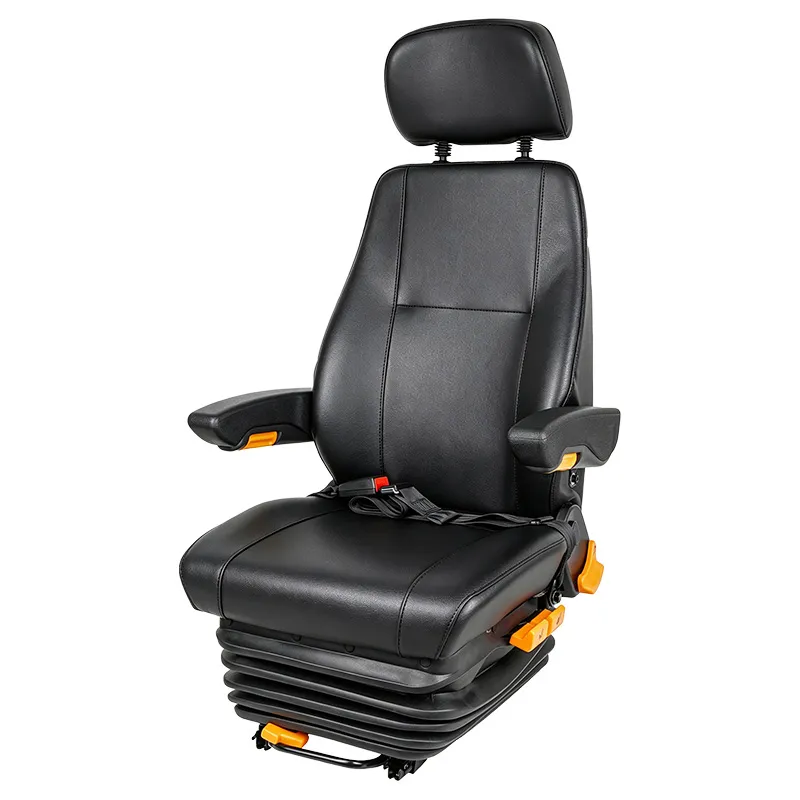 YQ50 | 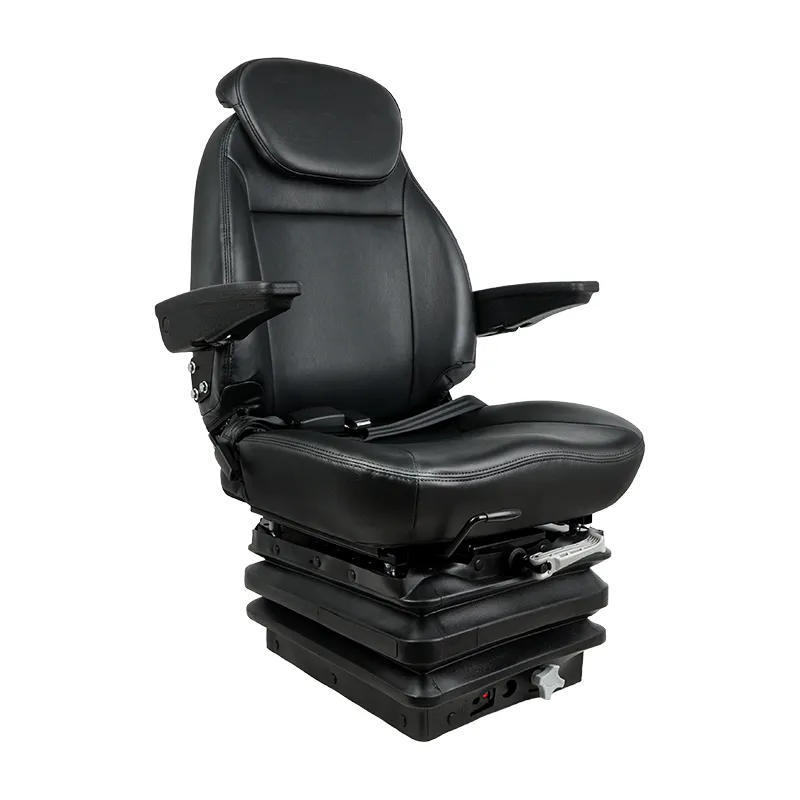 YS15 | YL02 YL02 | |
|---|---|---|---|---|
| Uses on the sheet | Construction machinery, crane, excavator, truck | Construction machinery, crane, excavator, truck | Construction machinery, crane, excavator, bus | Truck, construction machines, heavy equipment, bus driver |
| Fore-aft adjustment | 120 mm forward, 110 mm rearward, 23 positions | 120 mm | 176 mm, 16 mm per step | 190 mm, 10 mm per step |
| Backrest | 80° to 121° | 30° to 60° | 85° forward, 45° rearward | not published |
| Overall size | 570 × 480 × 1160 mm | on the drawing | 525 × 610 × 780 mm | not published |
| Weight adjustment | not published | not published | 50 to 130 kg | 50 to 130 kg |
| Suspension travel | not published | not published | 40 to 110 mm | 70 mm mechanical |
- YQ40 is the seat on this list when the buyer specifies the seat by its overall size and by a backrest range that reclines to 121°.
- YS15 and YL02 are specified by weight range and suspension travel, and the YS15 excavator seat page carries those figures. The excavator seat manufacturer page sets YQ40, YQ50 and YS15 side by side for excavator buyers.
- YQ50 is described by its drawing for height control, damping and locking, and the reply to your enquiry compares it with YQ40 on the figure you name.
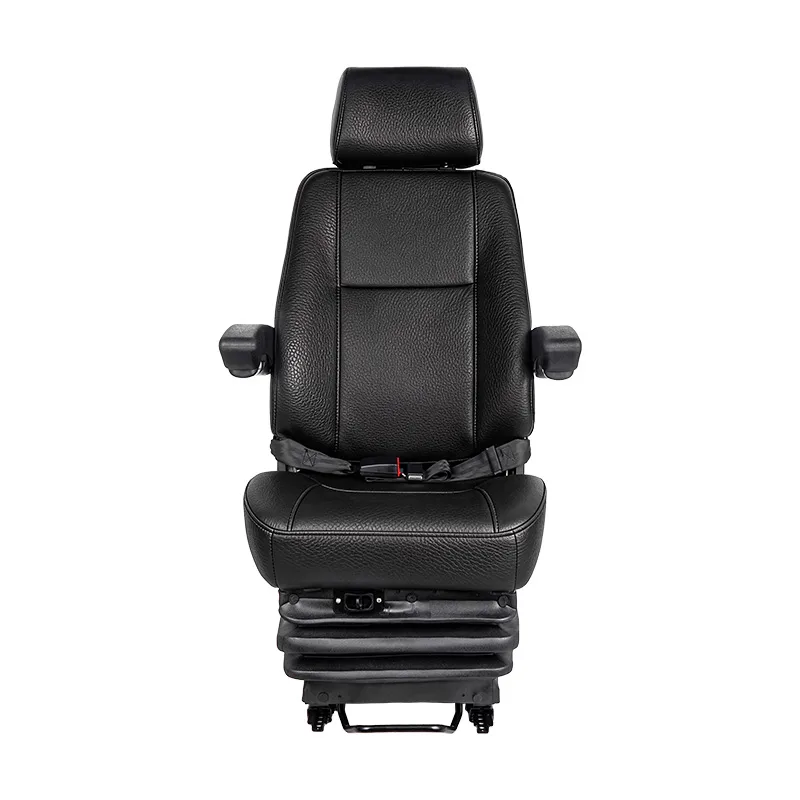
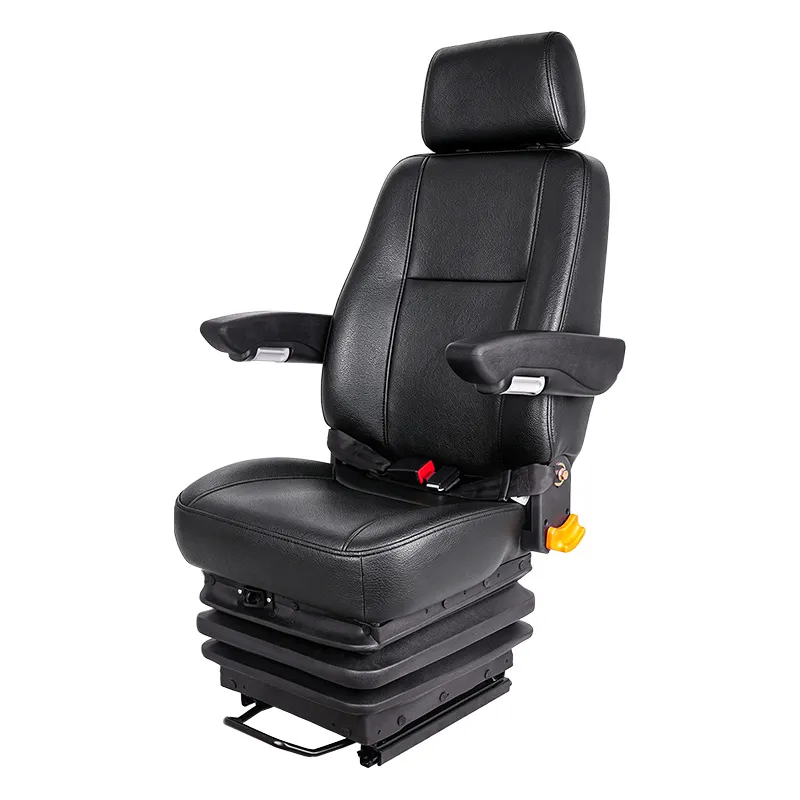
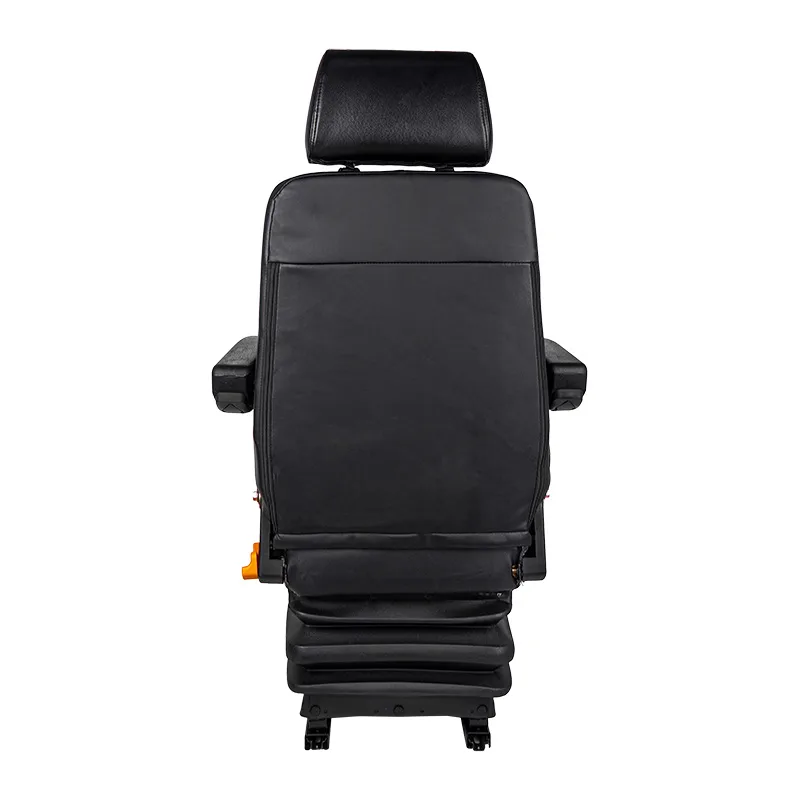
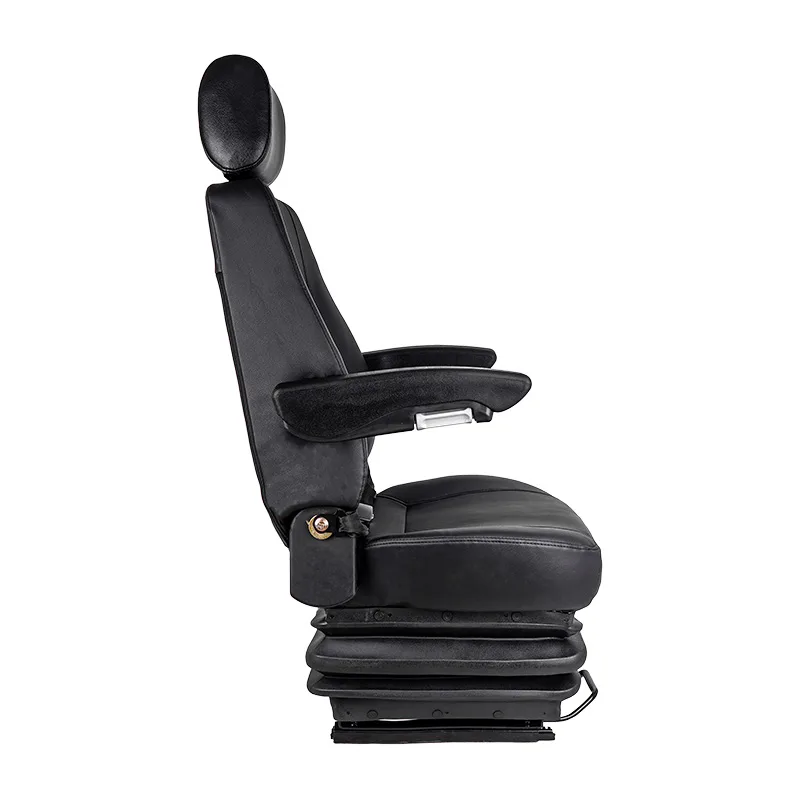
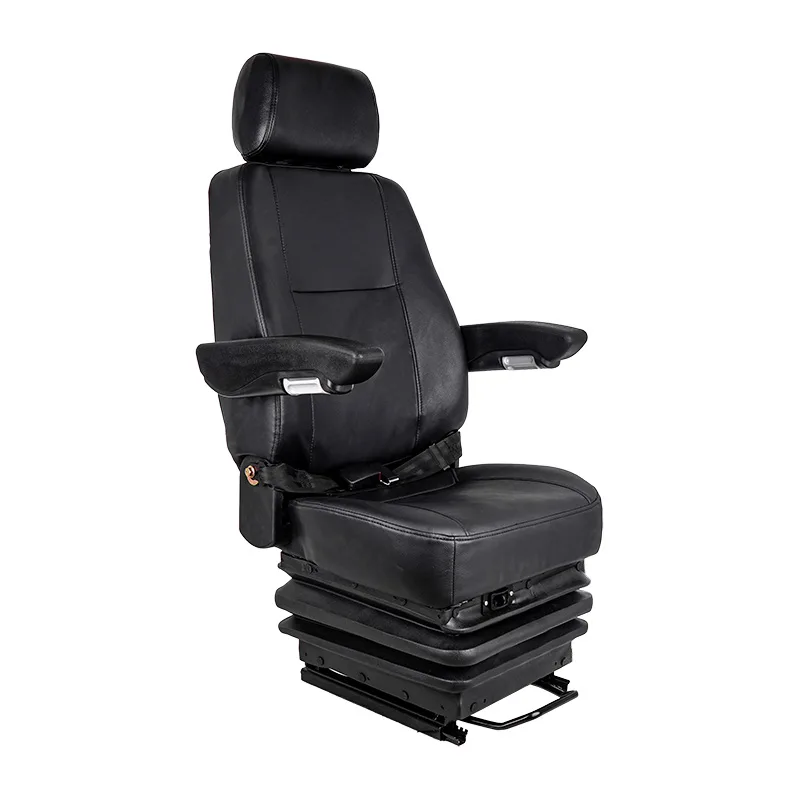
YQ40 in Photos: What Each View Lets You Check
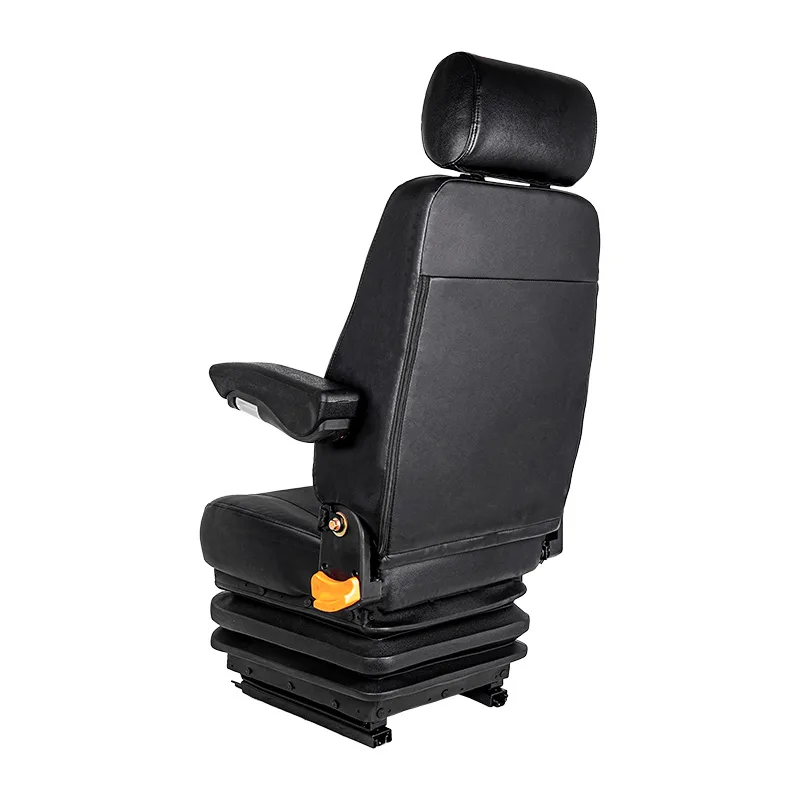
Sheet figures to hold the photos against
- Overall size 570 × 480 × 1160 mm
- Slide 120 mm forward, 110 mm rearward, 23 positions
- Backrest 80° to 121°
YQ40 Drawing Requirements: Seams, Rust, Welds and Adjustment
The YQ40 drawing ends in a block of technical requirements. For a purchasing engineer this block is the most useful part of the drawing, because it is a written statement of how the seat is to be made and how it is to behave, and it sits on the same sheet as the dimensions. The requirements below are quoted from the drawing. They are drawing requirements, and the drawing file is the document where they are read in full.
| 1.Seams | The YQ40 drawing requires that seams are stitched with thread of not less than 30 N and with a needle pitch of 3 to 5 mm. The cover is PVC, and the seams are the part of the cover that takes the load every time the operator gets in, slides and leans back, so the thread strength and the stitch pitch are the two values an incoming inspection can look up. |
|---|---|
| 2.Frame and exposed parts | The YQ40 drawing requires the frame and the exposed parts to be treated against rust. The requirement sits on the drawing next to the parts it applies to. |
| 3.Welded assemblies | The YQ40 drawing requires that welded assemblies show no misalignment, no cold welds and no missing welds. The seat frame is made on our robotic welding station, and the requirement is written into the drawing the engineer holds. |
| 4.Adjustment and locking | The YQ40 drawing requires the headrest, the backrest, the armrest, the front and rear height, the slide-rail adjustment and the damping lock to be flexible and reliable. The drawing states the requirement in words and publishes no test figure for it. |
| What the drawing leaves open | The drawing does not give an acceptance method for a finished weld, the rust protection process, the lock force or an operating-cycle count. These four items are requested from the factory, and the answers come in the enquiry reply together with the drawing. |
Engineers who run supplier approval copy this block into their purchase specification, and the purchase specification then refers to the YQ40 drawing by its content. The reply to your enquiry is built so the drawing and the parameter sheet are the two documents the specification refers to.
Open Items on the YQ40 Drawing: Four Requested From the Factory
Requested from the factoryWeld acceptance method
The drawing requires no misalignment, no cold welds and no missing welds. The method for accepting a finished weld is not on the drawing.
Requested from the factoryRust protection process
The drawing requires the frame and the exposed parts to be treated against rust. The process itself is not on the drawing.
Requested from the factoryLock force
The drawing requires the damping lock to be flexible and reliable, in words. It publishes no lock force.
Requested from the factoryOperating-cycle count
The drawing gives no operating-cycle count for the adjustments or the lock.
The four answers arrive in the enquiry reply text together with the drawing, so they can go into the supplier approval file next to the YQ40 parameter sheet.
Mounting Data: Drawing Hole Map and 3D Scan Fit Check
Plan view · Schematic, not to scale · hole dimensions stay on the drawing
The YQ40 drawing carries a mounting hole map. The map is for the engineer to lay over the cab floor, and the hole dimensions stay on the drawing file and are not copied onto this page. The drawing goes out with the first reply, so the mounting check starts from the original document and no value is retyped between us.
Machine builders
- Take the base hole pattern from the cab drawing.
- Lay the YQ40 drawing over it.
- Confirm that the holes line up.
Distributors and refit shops
- Measure the distance between the mounting holes of the old seat.
- Photograph the underside of the old seat, showing the rails and the hole layout.
- Compare the distance and the photos with the drawing.
At the factory, 3D scanning checks the base hole positions and the frame outer dimensions of the seat. The result goes back to you against the model parameter sheet.
If the hole pattern does not match your cab, the reply says so and the options are a different standard model or a custom change through the OEM and ODM seat manufacturer programs.

YQ40 Production Route: Foam Molding, Stamping, Robotic Welding and Assembly
YQ40 follows one production route on our own automated lines in the 35,000 m² plant. The route has four steps, and each step is run on equipment we own.
Foam molding
The cushion and the backrest are molded on our foam molding line.
Precision stamping
The frame and base parts are made by precision stamping.
Robotic welding
The frame assemblies are welded at the robotic welding station.
Assembly
The slide, the backrest mechanism, the cover and the options the buyer selected are assembled onto the frame.
Three Checks Around the Route: CAE, 3D Scanning and Pressure Distribution
Three checks sit around this route, and they run in our testing center. This page carries no test figure for any of them.
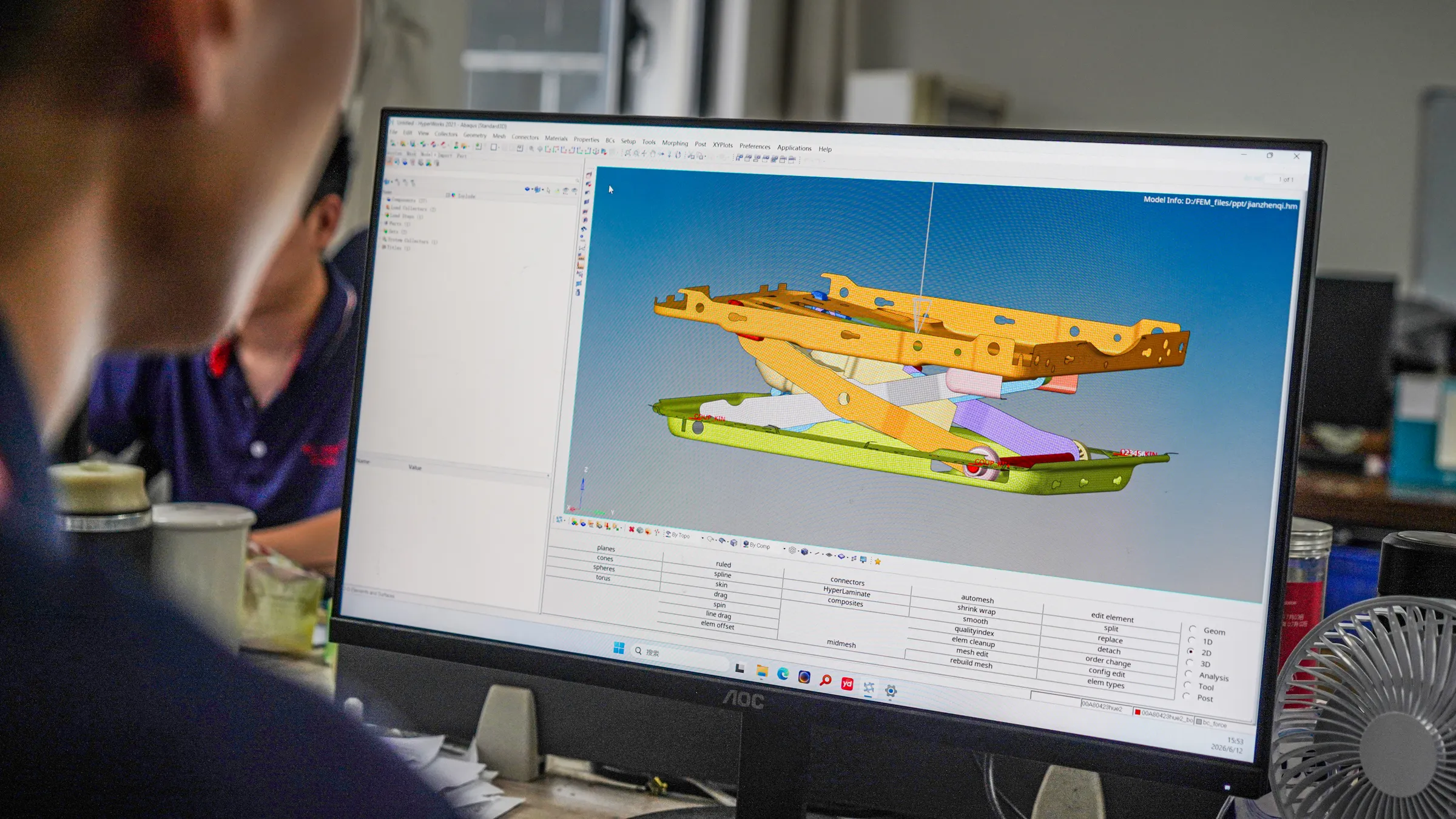
CAE structural analysis
Checks the frame at the design stage.
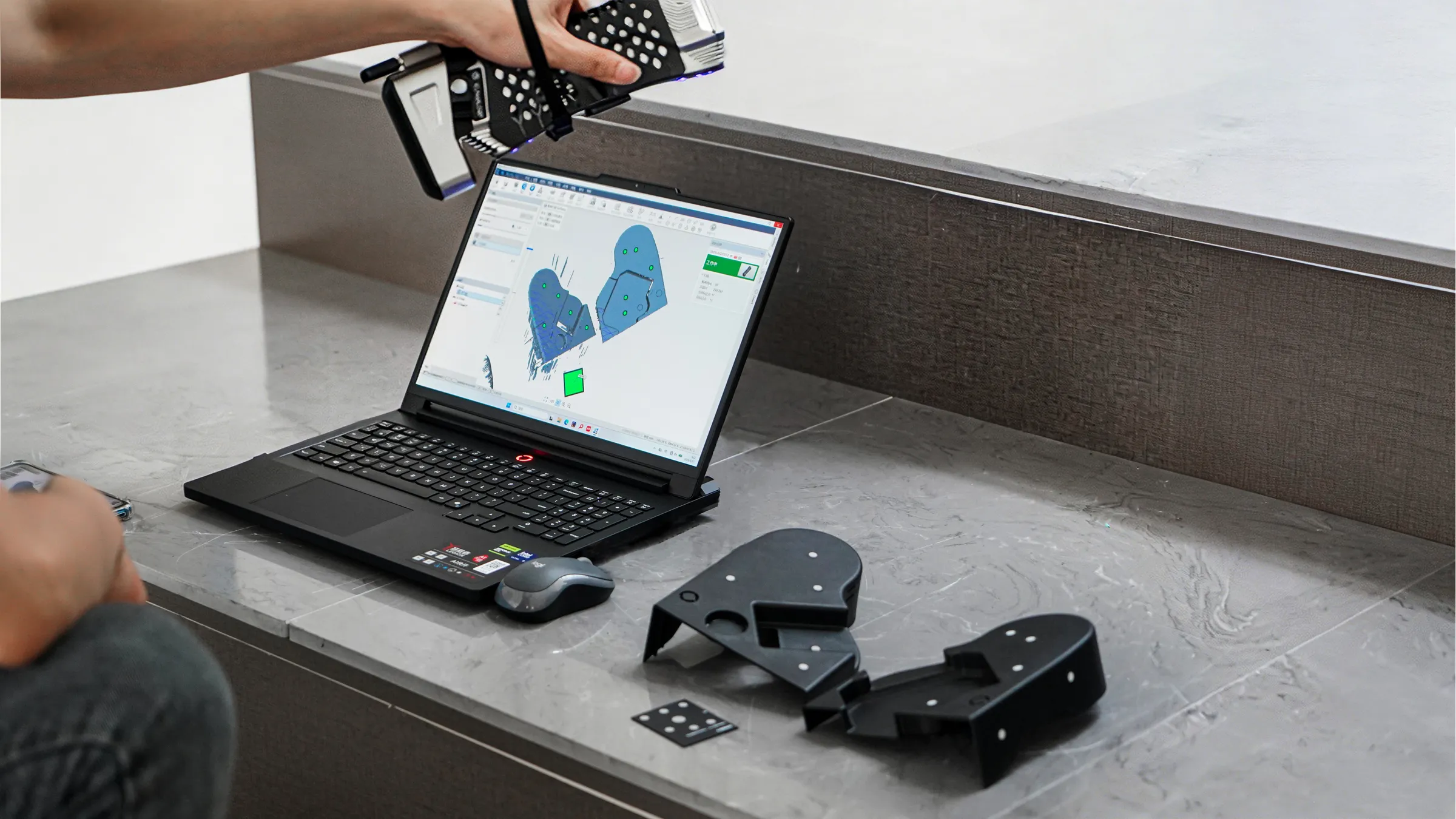
3D scanning
Checks the base hole positions and the frame outer dimensions, and the result goes back to the buyer against the model parameter sheet.
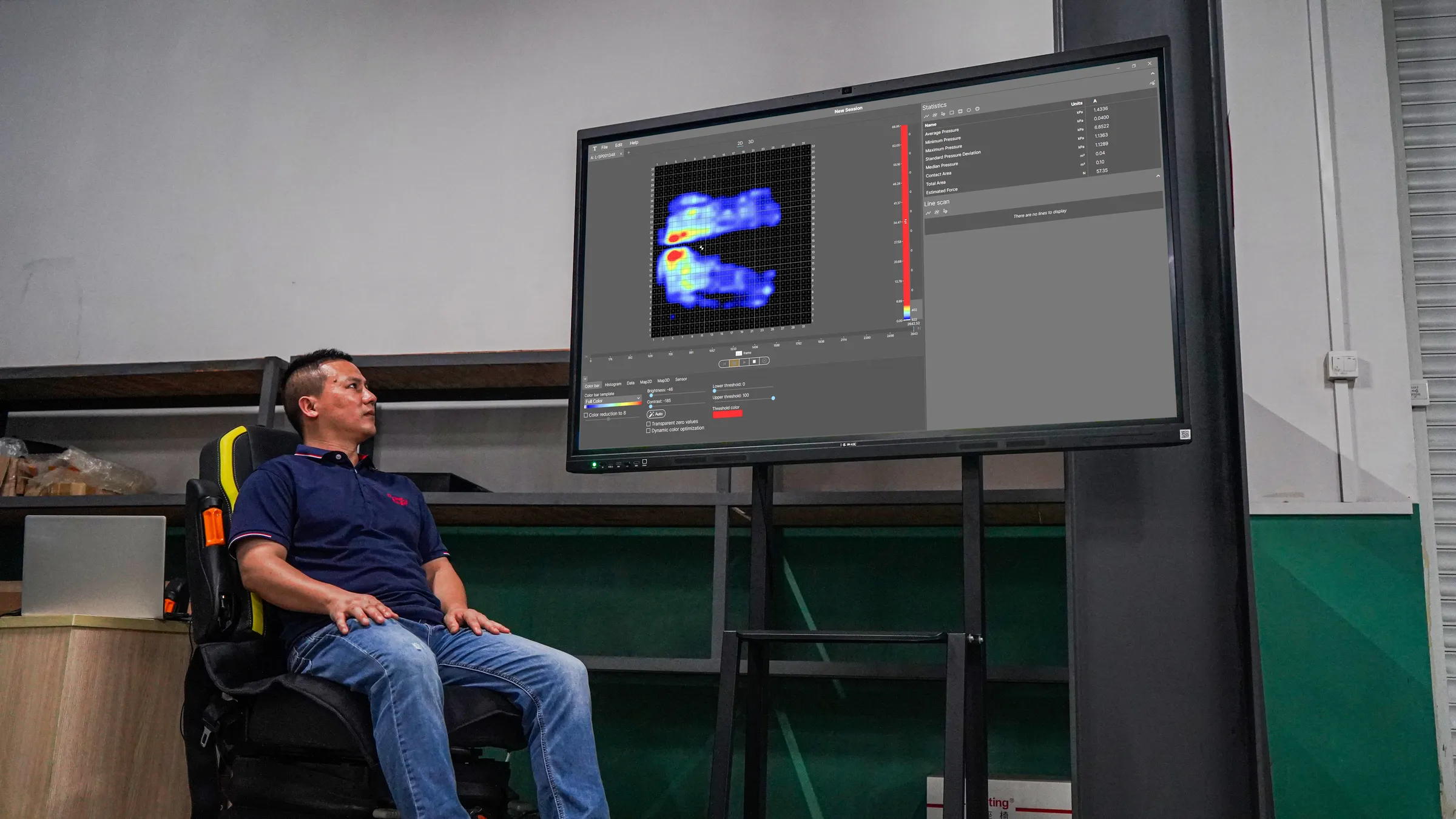
Pressure distribution comfort test
Evaluates how the cushion spreads pressure over long sitting.
The MES covers quality inspection and delivery together with the rest of the process, so the production and inspection record of a YQ40 seat sits in one system. The documents that travel with a YQ40 enquiry are listed in the document section below. If your approval process includes a factory visit, the factory takes bookings from customers who want to see the lines in person.
Machines on the Sheet, Cover and Options for YQ40
Other machines
The parameter sheet lists four uses for YQ40: construction machinery, crane, excavator and truck. The sheet gives no split of YQ40 across wheel loaders, backhoe loaders, road rollers and skid steer loaders, and it gives no model-by-model list of machine makes. For those machines, and for any machine size, the model comes from the reply to your enquiry. Send the machine make and model with photos of the seat position, and we reply with the model that matches. The reply may name YQ40 or another seat of the line.
Cover and options
YQ40 has a PVC cover. Armrests, headrests and seat belts are the options on the sheet. Orders state the option set with the model, so the first reply carries the model and its options on one line, and the drawing adjustment requirements above cover the headrest and the armrest where they are fitted.
Supply Routes for Machine Builders and Distributors
Machine buildersBuilt to the cab drawing
Machine builders order YQ40 through OEM and ODM. The model is fixed from the cab drawing and the mounting hole map, and structure changes go through the research center.
Distributors, importers and refit shopsSold under your brand
Distributors, importers and refit shops order YQ40 as wholesale or private label, with the seat carrying their own brand, and bulk supply can be arranged for a series so the model and its options are written on one sheet.
Our customers are machine builders and distributors, and the reply to an enquiry follows the route that matches the sender. The OEM and ODM service covers the whole product line, and the OEM and ODM seat manufacturer page sets out how an enquiry becomes a drawing and a model.
Documents Sent With a YQ40 Enquiry: Parameter Sheet, Drawing and Certificates
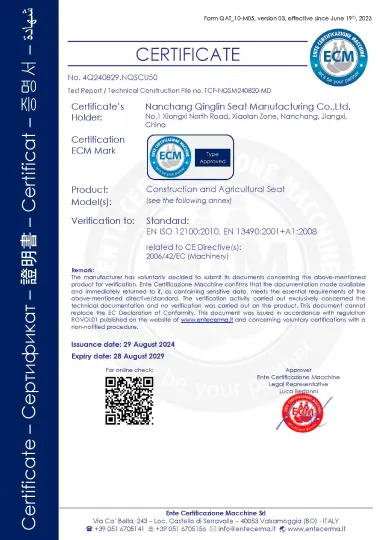
ISO 9001 and CE copies. Select one to enlarge.

The YQ40 parameter sheet
Purchasing orders against it, and it is the reference for every figure on this page.
The YQ40 drawing
It carries the dimensions, the mounting hole map and the technical requirements block quoted above.
The factory's answers on the open items
These are the weld acceptance method, the rust protection process, the lock force and the operating-cycle count, and they arrive in the reply text.
Copies of the ISO 9001:2015, CE, RoHS and REACH certificates
The quality department files them with the supplier record. The certificate numbers are on the copies and not on this page.
Enquiry Checklist for YQ40: Copy the Set That Matches What You Hold
Both sets go into one email. Tick what applies, copy the list and paste it into your message.
If you hold the cab drawing
Machine builders, engineering and purchasing.
If you hold an old seat
Distributors, importers and refit shops.
Paste the set into your email and send it to [email protected]. The reply confirms the model and attaches the sheet and the drawing.
Related Models and Pages for YQ40 Buyers
Models and guides that sit next to YQ40 when a buyer compares seats.
Excavator seat manufacturer: YQ40, YQ50 and YS15 for machine builders and distributorsConstruction machinery seat manufacturer range: YL02, YQ40, YQ50, YS2-8 and YS15YS15 excavator seat manufacturerSeat fitment compatibility guide for machine builders and distributorsOEM and ODM seat manufacturer programs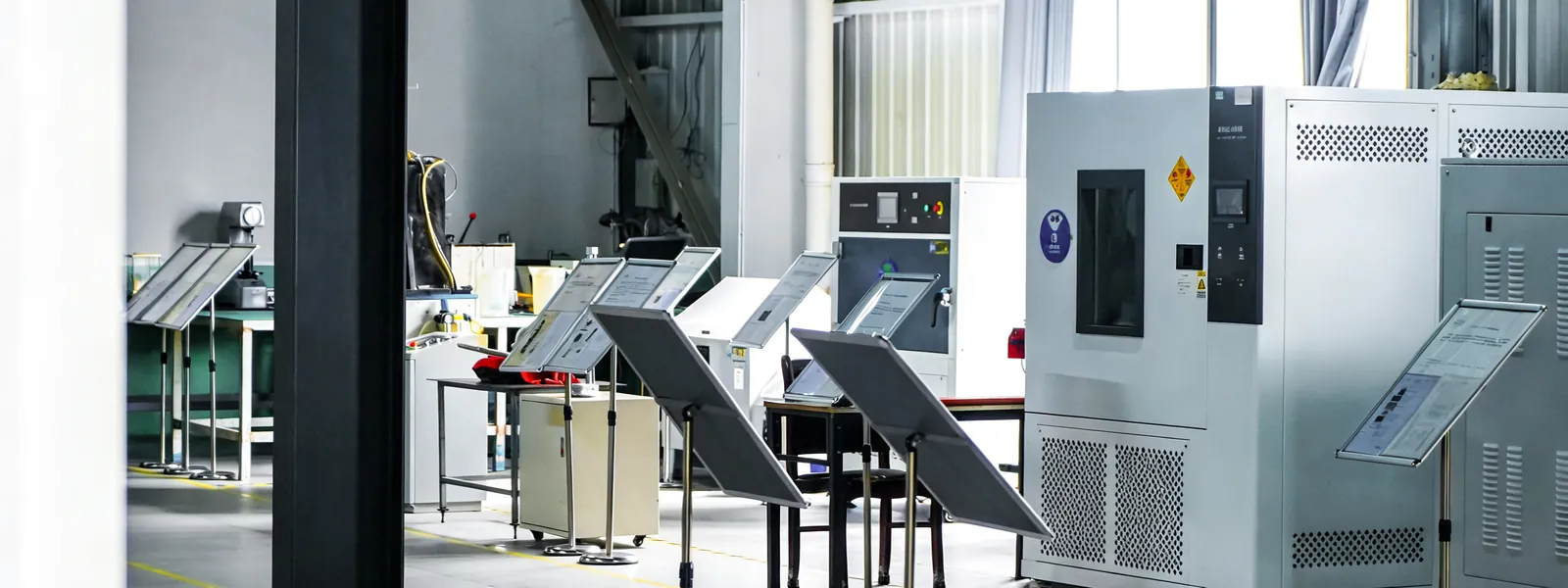
Get the YQ40 Sheet and Drawing for Your Machine
Send the machine, the space and the options.
Send machine detailsSend the Machine Make and Model
Send the machine make and model, the free space at the seat position and the options you want to [email protected], or call +86 177 0272 7677. We reply with the confirmed model, the YQ40 parameter sheet and the YQ40 drawing. The contact page for the YQ40 heavy machinery seat supplier has the enquiry form.
Reach us directly
What to include
- Machine make and model
- Free space at the seat position
- Options you want